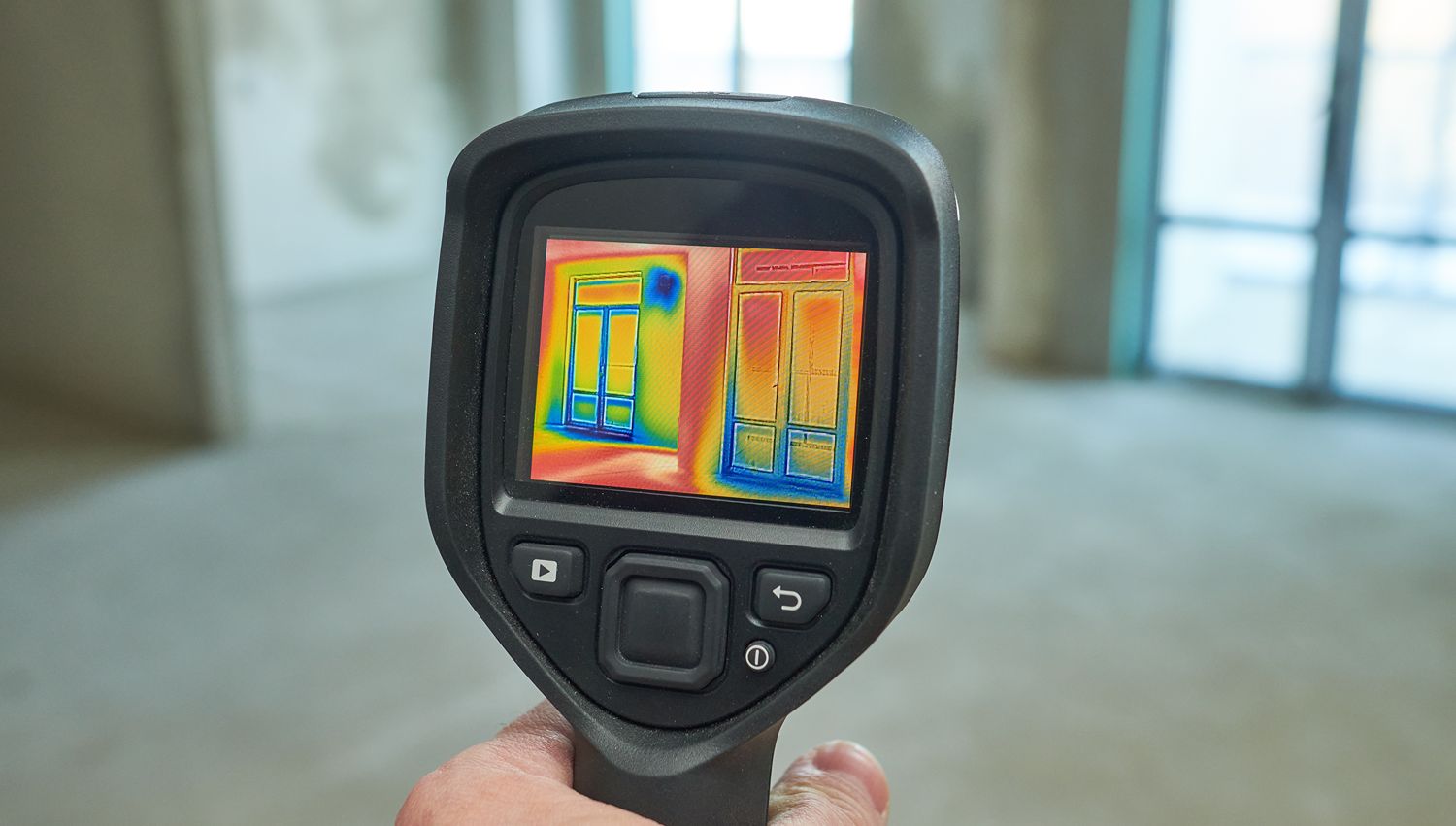
If you’re considering an air source heat pump, you’ll almost certainly hear the term “heat loss survey” early in the process. It’s a step some homeowners are tempted to see as a formality – but it’s actually one of the most important parts of getting a heat pump that works properly. Here’s what a heat loss survey involves, why it matters so much, and what to expect.
What is a heat loss survey?
A heat loss survey is a detailed assessment of how much heat your home loses, room by room, in cold weather. Every home leaks heat – through walls, windows, roofs, floors, and draughts – and the rate at which it does so determines how much heating it needs to stay comfortable.
The survey calculates this heat loss precisely, measured in kilowatts, so your installer knows exactly how much heating output your home requires on the coldest days of the year. It’s a far more thorough process than simply estimating based on the size of your property or the boiler you currently have.
Why is it so important for a heat pump?
With a traditional gas or oil boiler, there’s often a degree of over-sizing built in – boilers run at high temperatures and can usually push out more heat than strictly needed. Heat pumps are different. They’re most efficient when carefully matched to a home’s actual heat demand, running at lower flow temperatures over longer periods.
This makes accurate sizing essential:
- An oversized heat pump costs more to buy, may cycle on and off inefficiently, and wastes money.
- An undersized heat pump won’t keep your home warm on the coldest days, leaving you uncomfortable and disappointed.
A heat loss survey is the only way to get this balance right. It ensures the heat pump specified for your home is exactly the right size – not a guess based on rough rules of thumb.
It’s not just about the heat pump
A proper heat loss survey also informs the rest of your system design. Because heat pumps run at lower water temperatures than boilers, your existing radiators may need to be larger to deliver the same warmth. The survey identifies, room by room, whether your current radiators are up to the job or whether some need upgrading, and helps determine whether underfloor heating might be worth considering in certain areas.
This room-by-room detail means your installer can design a complete system that performs efficiently throughout your home, rather than discovering cold rooms after installation.
A requirement, not an optional extra
For heat pump installations carried out under the MCS standard – which is what you need to qualify for grants such as the Boiler Upgrade Scheme – a heat loss calculation is a formal requirement. Any reputable installer will insist on carrying one out before quoting for or fitting a heat pump. If an installer offers to fit a heat pump without one, that’s a genuine red flag.
What does the survey involve?
During a heat loss survey, a qualified surveyor will typically:
- Measure each room and note its dimensions
- Assess your walls, windows, floors, and roof, and how well insulated they are
- Take note of your property’s age, construction type, and orientation
- Record your existing radiators and pipework
- Consider your local climate and design temperatures
From this, they produce detailed calculations that guide the specification of your heat pump, radiators, and hot water cylinder.
How you can help
You can make the survey as accurate as possible by being ready to share details about any insulation improvements you’ve made, such as loft or cavity wall insulation, and by giving the surveyor access to all rooms, including lofts and airing cupboards. The more complete the picture, the better tailored your system will be.
The bottom line
A heat loss survey isn’t a box-ticking exercise – it’s the foundation of a heat pump system that keeps your home warm and runs efficiently for years to come. By calculating exactly how much heat your home needs, it ensures your heat pump is correctly sized, your radiators are up to the task, and your investment delivers the comfort and savings you’re expecting. It’s also a requirement for MCS-certified installations and grant eligibility, so it’s a step no reputable installer will skip.
At NCS Plumbing & Heating Specialists, every air source heat pump installation begins with a thorough heat loss survey, carried out by our MCS-accredited team across Hertfordshire and the South East. Get in touch for a free, no-obligation consultation to start your heat pump journey the right way.