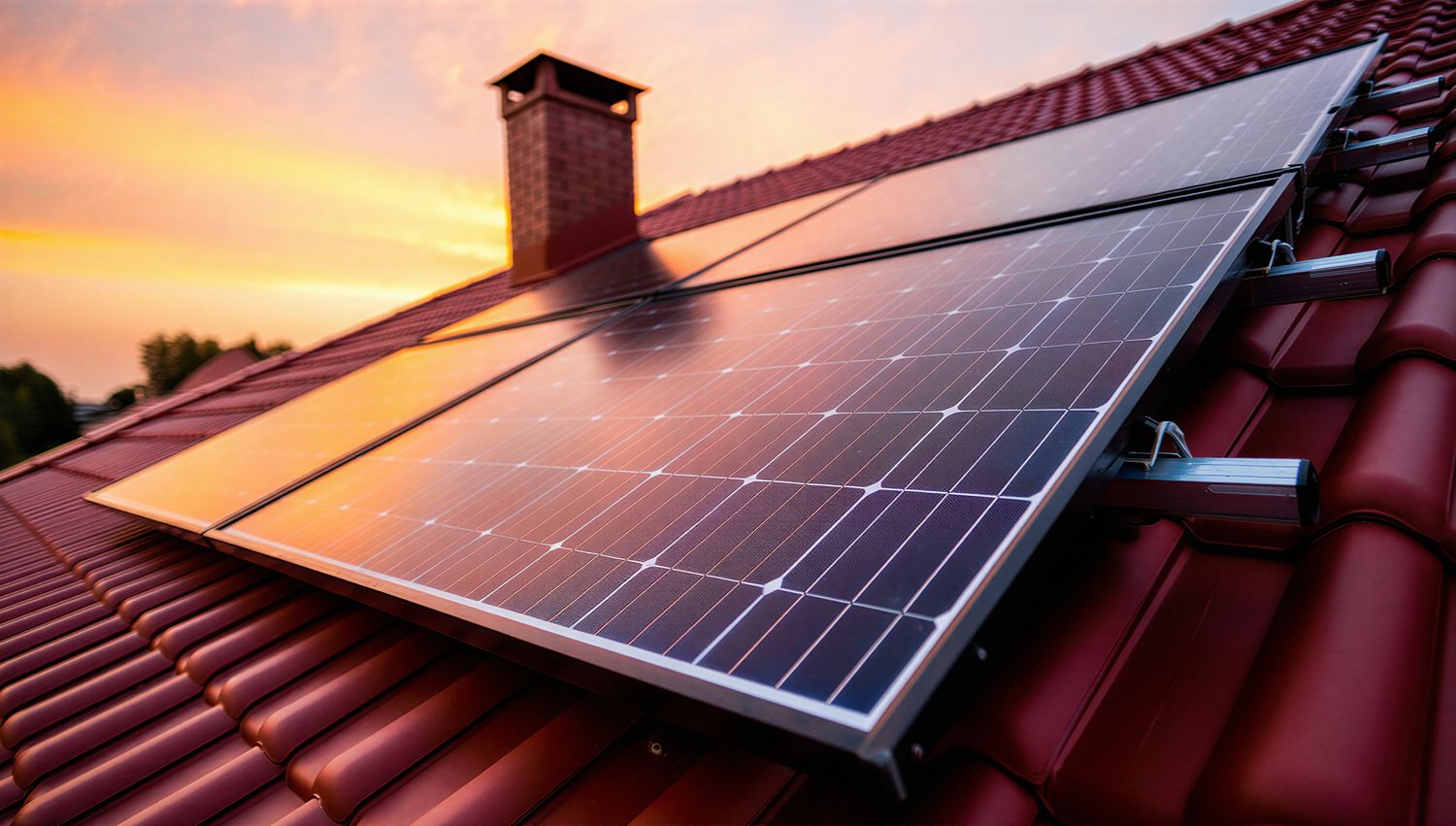
Solar panels are a brilliant way to generate your own clean electricity – but there’s a catch many homeowners only discover after installation. Without a battery, roughly half of everything your panels generate gets exported to the grid, often for far less than it costs to buy that electricity back later. Solar battery storage aims to close that gap. So is it worth adding to your system? Let’s take an honest look.
What does a solar battery actually do?
During the day, your solar panels frequently generate more electricity than your home is using – especially if everyone’s out at work or school. Without somewhere to store it, that surplus is sold back to the grid under the Smart Export Guarantee (SEG), typically at a low rate.
A solar battery captures that surplus instead. It stores your daytime generation so you can use it in the evening, when your panels have stopped producing and grid electricity is at its most expensive. In practice, this lifts your self-consumption – the proportion of your own solar energy you actually use – from around 30 to 40 per cent up to as much as 60 to 80 per cent.
How much can you save?
The economics come down to a simple gap. You might buy electricity from the grid at around 24 to 25p per unit, while exporting your surplus for as little as 4 to 12p under the SEG. Every unit your battery stores and lets you use yourself, rather than exporting and rebuying, captures that difference.
For a well-sized system, this typically translates to savings of somewhere between £200 and £450 a year, depending on your battery size, your electricity usage, and your tariff. Homes that pair a battery with a time-of-use tariff can boost this further by charging the battery with cheap off-peak electricity overnight and using it during peak hours.
What does it cost?
Battery prices vary widely depending on capacity and whether you’re installing alongside new panels or retrofitting to an existing system. As a rough guide for 2026, a solar battery typically costs between £3,000 and £6,500 installed. Smaller 3 to 5 kWh units sit at the lower end, while larger 10 kWh-plus systems cost more.
There’s an important saving to be aware of: batteries currently qualify for 0 per cent VAT when supplied and installed as part of the same contract as your solar PV system, a relief that applies until 31 March 2027. After that date, VAT is set to revert to a higher rate – so installing sooner, or installing your battery at the same time as your panels, can make a meaningful difference to the overall cost.
When a battery makes the most sense
A battery isn’t automatically the right choice for every home. It tends to deliver the strongest return when:
- You’re out during the day, so much of your solar generation would otherwise be exported
- Your SEG export rate is low, widening the gap between what you’d earn exporting and save by using it yourself
- You have high evening electricity use
- You drive an electric vehicle you can charge from stored or off-peak power
- You want a degree of backup power during grid outages
By contrast, if you work from home and already use most of your solar energy as it’s generated, your self-consumption may already be high – which means a battery adds less value.
Retrofit or install alongside new panels?
If you’re installing solar for the first time, adding a battery at the same time is usually the most cost-effective route – the installation is integrated, and you benefit from the 0 per cent VAT relief.
Retrofitting a battery to an existing solar system is entirely possible, but it can cost a little more. Existing systems often need an AC-coupled battery with its own inverter, unless you already have a hybrid inverter in place. A quick system check will confirm the best approach for your setup.
The bottom line
Solar battery storage isn’t essential – but for the right home, it transforms how much value you get from your panels. If a good chunk of your generation is currently being exported cheaply, a battery lets you keep and use that energy yourself, cutting your reliance on the grid and squeezing more savings from your investment. The key is sizing it correctly for your usage and tariff, rather than simply buying the biggest one available.
At NCS Plumbing & Heating Specialists, we design and install solar PV and battery storage systems across Hertfordshire and the South East, helping you get the most from every unit your panels generate. Get in touch for a free, no-obligation quote to find out whether a battery is right for your home.