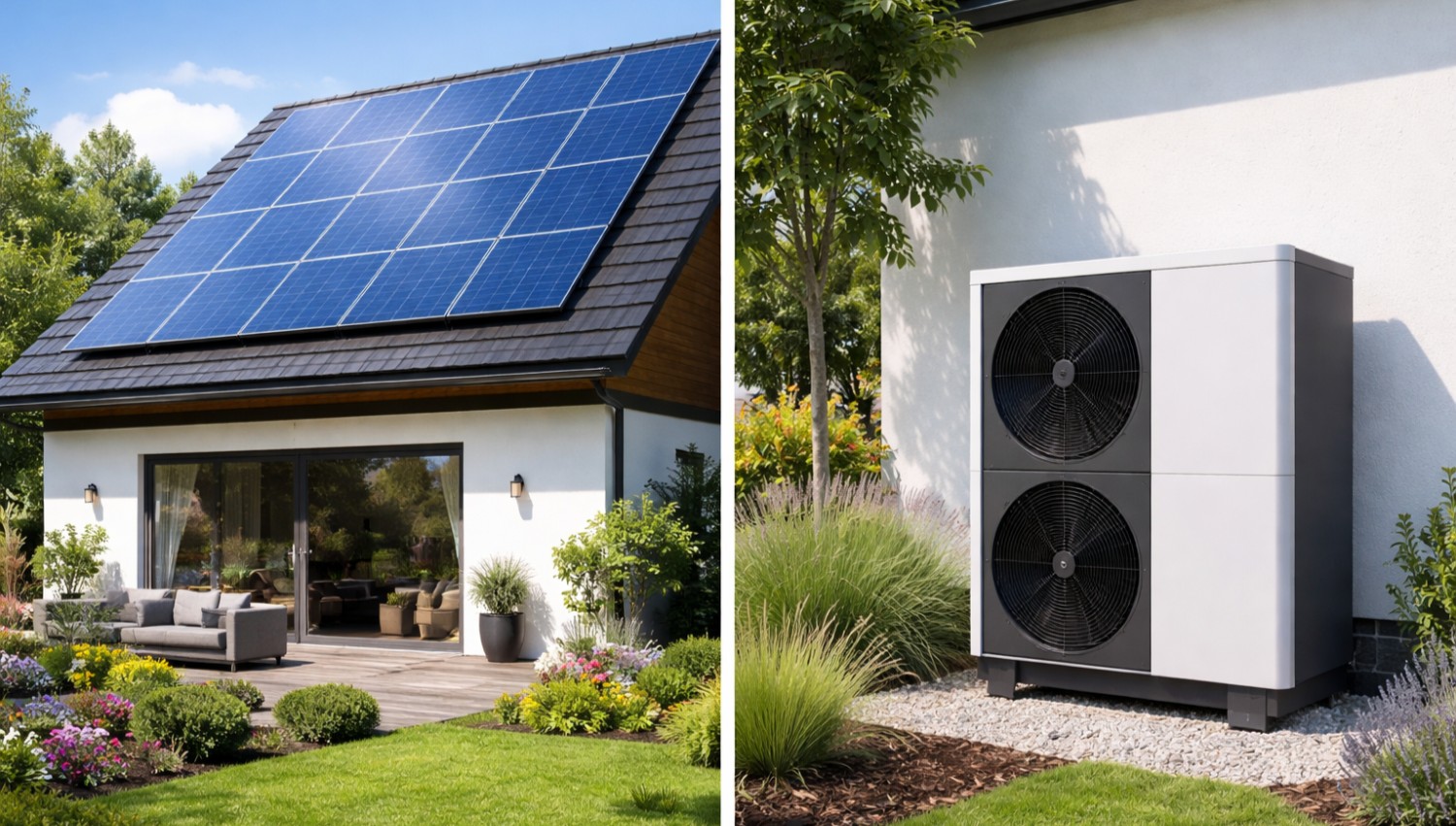
If you’re serious about reducing your energy bills and carbon footprint, combining solar panels with an air source heat pump is one of the most powerful upgrades you can make to your home. Together, these two technologies create a highly efficient, low-carbon heating system that can dramatically cut your reliance on the grid.
But how exactly do they work together, and is this setup right for your home? Let’s take a closer look.
How Solar Panels and Heat Pumps Complement Each Other
Solar PV panels generate electricity from daylight, which can power your home’s appliances, lighting, and – crucially – your heating system. An air source heat pump uses electricity to extract heat from the outside air and transfer it into your home, providing both heating and hot water.
Here’s where the magic happens: because heat pumps are so efficient – producing three to four units of heat for every unit of electricity they consume – powering them with free solar electricity makes your heating almost cost-free during sunny periods.
In simple terms, the sun powers your panels, your panels power your heat pump, and your heat pump heats your home. It’s a closed loop of clean, renewable energy.
The Benefits of Pairing Solar and Heat Pumps
Drastically Reduced Energy Bills
Running a heat pump on grid electricity is already cheaper than oil or LPG heating for many households. But when you generate your own electricity with solar panels, those running costs drop even further. On sunny days, your heating and hot water can effectively cost nothing.
Lower Carbon Emissions
Both technologies produce zero direct emissions. When powered by solar electricity, a heat pump becomes one of the greenest heating options available – far cleaner than gas, oil, or even standard grid electricity.
Energy Independence
Generating and using your own electricity reduces your dependence on energy suppliers and protects you from future price rises. With battery storage added to the mix, you can store excess solar energy for use in the evenings or on cloudy days.
Future-Proofed Home
With the UK government’s push towards net zero and the planned phase-out of gas boilers in new builds, homes with renewable heating systems are increasingly attractive to buyers. Solar and heat pump installations can boost property value and appeal.
Access to Government Support
Both technologies are supported by government incentives. The Boiler Upgrade Scheme offers grants of up to £7,500 towards heat pump installation, while the Smart Export Guarantee pays you for surplus solar electricity exported to the grid.
Making the Most of This Combination
To get the best results from a solar and heat pump system, a few factors come into play.
Sizing matters. Your solar array should be large enough to cover a meaningful portion of your heat pump’s electricity demand. A typical home might pair a 4kWp solar system with a correctly sized air source heat pump.
Timing is key. Heat pumps can be programmed to run during daylight hours when solar generation is highest. Heating your home or hot water tank during the day – rather than in the evening – maximises the use of free solar electricity.
Consider battery storage. A home battery allows you to store excess solar energy generated during the day for use when the sun goes down. This is especially useful in winter when daylight hours are shorter.
Insulation helps. Both solar panels and heat pumps perform best in well-insulated homes. Good insulation reduces the amount of heat your home loses, meaning your heat pump works less hard and your solar electricity goes further.
Is This Setup Right for You?
Combining solar panels and an air source heat pump isn’t for every home, but it’s ideal if you:
- Own a property with suitable roof space for solar panels
- Have outdoor space for a heat pump unit
- Want to significantly reduce both bills and carbon emissions
- Are planning a renovation or new build
- Live off the gas grid and rely on oil or LPG
Even if you already have solar panels installed, adding a heat pump can unlock their full potential by giving you a high-value use for the electricity you generate.
The Bottom Line
Solar panels and air source heat pumps are impressive technologies on their own – but together, they form the ultimate low-carbon home heating setup. By generating your own clean electricity and using it to power highly efficient heating, you can cut bills, reduce emissions, and future-proof your home for decades to come.
Interested in combining solar and heat pump technology in your home? At NCS Plumbing & Heating, we’re MCS-certified installers of both air source heat pumps and solar PV systems. Get in touch today for a free, no-obligation consultation.