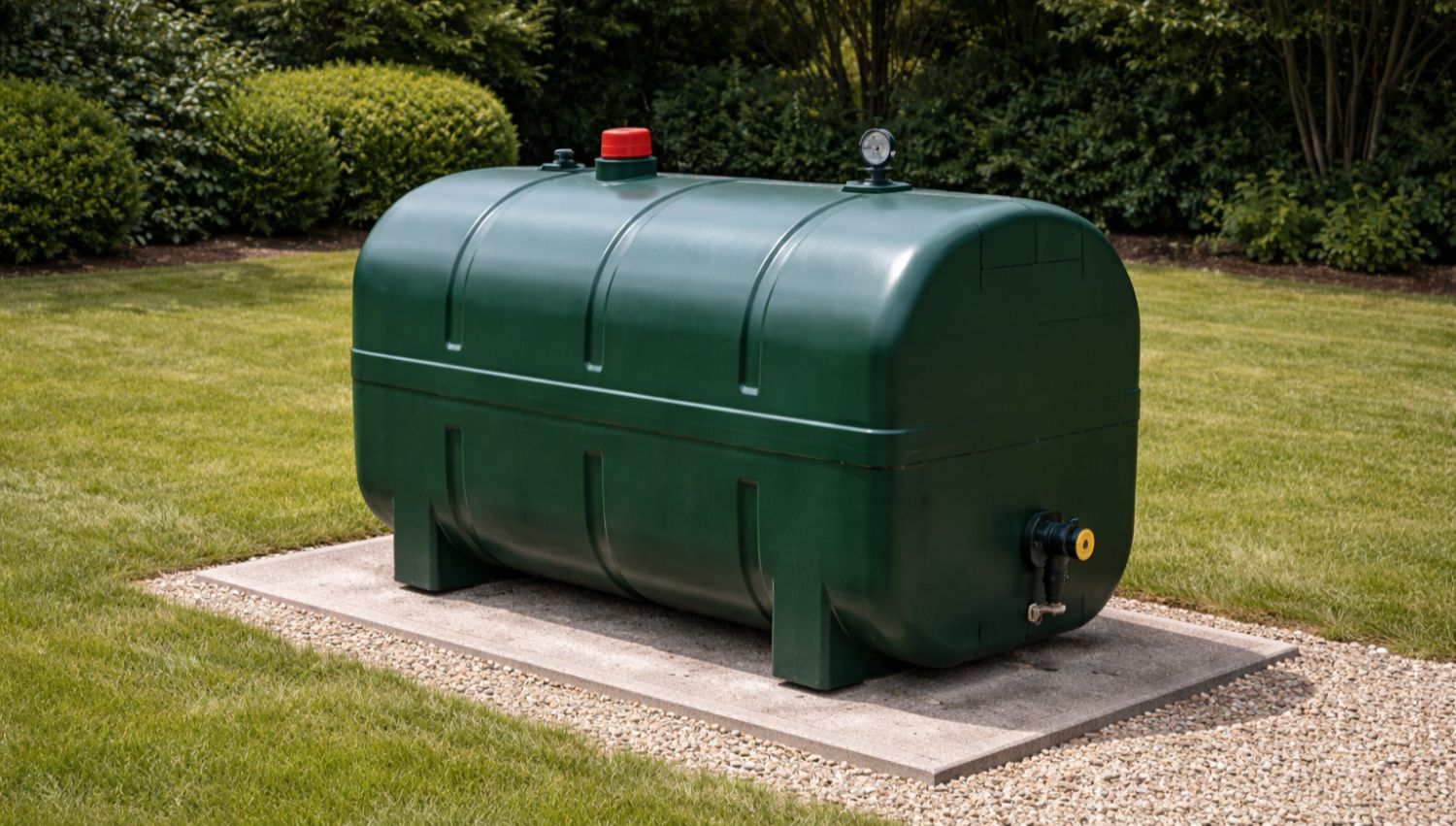
If your home runs on oil heating, you’re probably well aware of the importance of keeping your boiler serviced and your fuel topped up. But there’s one part of the system that often gets overlooked entirely – the oil tank itself.
Oil tanks don’t last forever, and an ageing or failing tank can cause far bigger problems than an inefficient boiler ever could. Here’s what you need to know about oil tank lifespan, the warning signs to watch for, and when it’s time to call in the professionals.
How Long Does a Domestic Oil Tank Last?
The lifespan of a domestic oil tank depends largely on the material it’s made from and how well it’s been maintained. As a general guide:
- Plastic (single-skin) tanks: typically 10-20 years
- Steel tanks: can last 20+ years with proper maintenance, but are more prone to corrosion
- Bunded (double-skinned) tanks: tend to last longer and offer added protection against leaks
Many older properties still have tanks that were installed decades ago and have never been replaced. If you’re not sure how old your tank is, it’s worth finding out – an unknown-age tank should always be professionally inspected.
Why Does Tank Condition Matter So Much?
Unlike a boiler problem, which typically results in lost heating or hot water, a failing oil tank can have serious consequences beyond simple inconvenience. A leaking tank can cause significant environmental damage, contaminating soil and groundwater. This can result in costly clean-up bills – sometimes running into the tens of thousands of pounds – and potential liability issues for the homeowner.
There’s also the matter of wasted fuel. Even a slow, undetected leak means you’re losing the oil you’ve paid for, which adds up quickly over time.
Signs Your Oil Tank May Need Replacing
It’s not always obvious when a tank is approaching the end of its useful life, but there are some clear warning signs to look out for:
Visible corrosion or rust – particularly on steel tanks, surface rust can indicate deeper structural deterioration.
Cracks, splits, or deformation – any visible damage to the tank body is a serious concern and should be assessed immediately.
Oil stains or wet patches around the base – even small amounts of oil on the ground beneath or around your tank suggest a leak is present or developing.
A persistent smell of oil – if you can smell oil near your tank when there’s no obvious reason for it, don’t ignore it.
Unstable or sunken base – oil tanks must sit on a solid, level, non-combustible base. If yours has shifted, cracked, or sunk, the tank may be at risk.
An old or unknown installation date – if your tank was installed before 2000 and hasn’t been replaced, it’s likely approaching or beyond its recommended service life.
Regulations You Need to Be Aware Of
Domestic oil tanks in England must comply with the Control of Pollution (Oil Storage) Regulations, which set out requirements for tank capacity, positioning, and containment. Bunded tanks – those with a secondary outer skin to contain any leaks – are often required for tanks over 2,500 litres, or where a leak could reach a watercourse or drain.
Installations must be carried out by an OFTEC-registered engineer to ensure full compliance with current regulations. Using an unregistered installer can invalidate insurance, cause issues with property sales, and leave you liable for any environmental damage.
What’s Involved in Replacing an Oil Tank?
The process of replacing a domestic oil tank is more straightforward than many homeowners expect. A registered engineer will assess your current setup, recommend the right tank size and type for your property, handle the removal and disposal of the old tank, and install the new one to current regulations.
At NCS, our old tanks are recycled rather than simply disposed of, which is important for environmental compliance and peace of mind.
Depending on the location and access, installation can often be completed in a single visit – with minimal disruption to your home heating.
Should You Upgrade to a Bunded Tank?
If your current tank is single-skin and due for replacement, upgrading to a bunded tank is well worth considering. The double-wall construction provides a secondary containment layer, significantly reducing the risk of environmental damage in the event of a leak. Many insurers and mortgage lenders now expect bunded tanks to be in place, particularly for rural properties.
Don’t Wait for a Problem to Force Your Hand
Oil tank issues rarely announce themselves dramatically. More often, they develop quietly over time – until a leak, a failed inspection, or an insurance query brings the problem into focus. A proactive approach is always cheaper and less stressful than an emergency response.
If your tank is ageing, showing any of the warning signs above, or simply hasn’t been inspected in a while, now is a good time to act.
At NCS Plumbing & Heating, our OFTEC-registered engineers carry out domestic oil tank installations and replacements across Hertfordshire and the South East. We’ll handle everything from site assessment to installation and disposal of your old tank.
Get in touch with NCS today for a free, no-obligation quote on oil tank replacement.