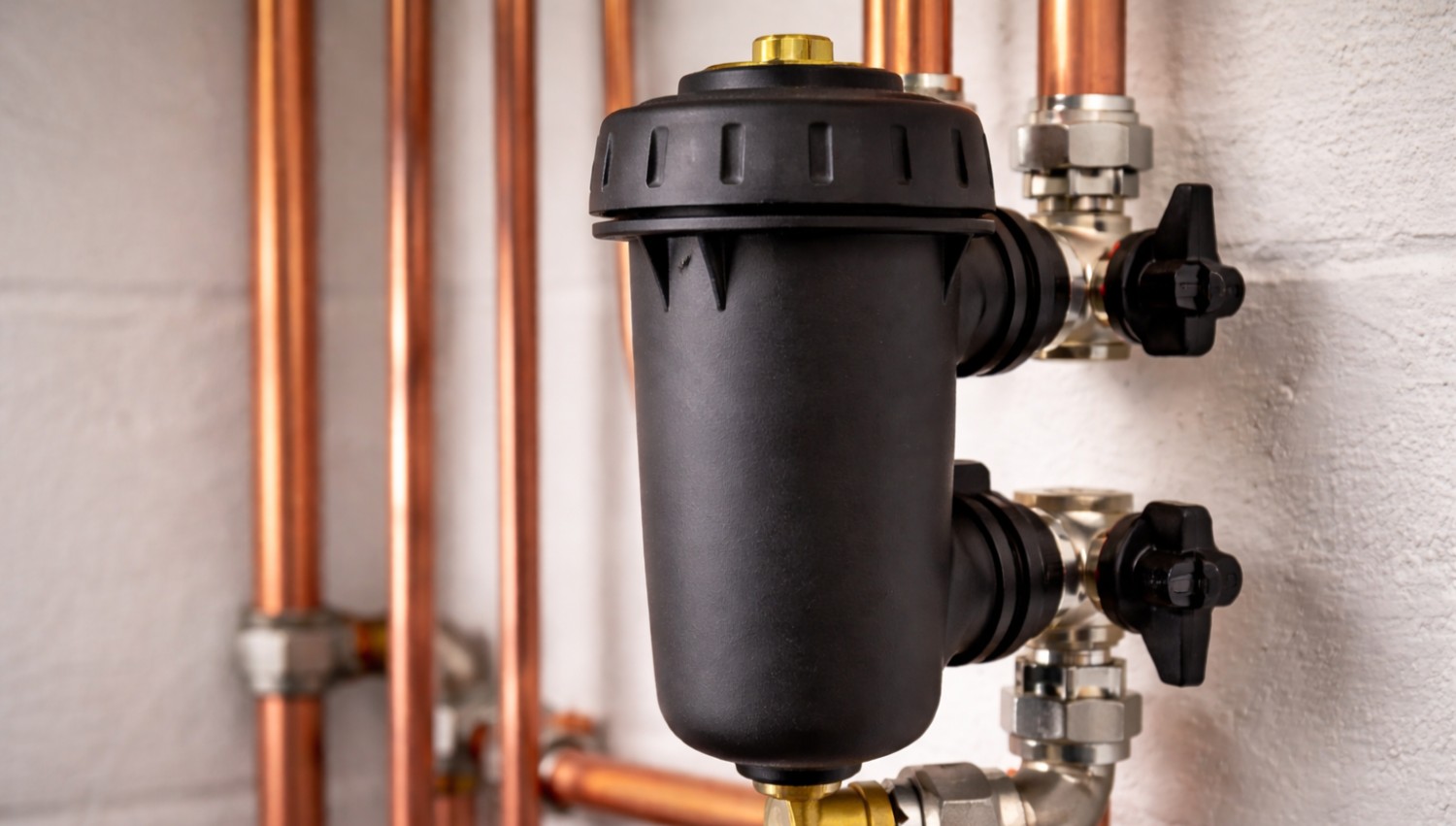
If you’ve ever had a boiler service or a new boiler installed, you may have heard your engineer mention a magnetic filter. But what exactly is it, what does it do, and is it really necessary?
In short, a magnetic filter is one of the simplest and most effective ways to protect your boiler and central heating system from damage. Here’s everything you need to know.
What Is a Magnetic Filter?
A magnetic filter is a small device fitted to your central heating pipework, usually near the boiler. Inside, it contains a powerful magnet that attracts and captures metallic debris – commonly known as sludge – as water circulates through your system.
This sludge is a mixture of rust, iron oxide, and other particles that naturally build up inside radiators and pipes over time. Left unchecked, it can cause serious problems for your heating system.
Where Does Sludge Come From?
Every central heating system contains water, metal pipes, and metal radiators. Over time, the water reacts with the metal surfaces, causing corrosion. This produces iron oxide – a black, mudite substance that breaks away and circulates through your system.
Older systems, systems that haven’t been maintained, or systems with untreated water are especially prone to sludge buildup.
What Problems Does Sludge Cause?
Sludge might seem harmless, but it can lead to a range of costly issues:
Cold spots on radiators. Sludge settles at the bottom of radiators, blocking the flow of hot water and leaving cold patches – even when your heating is on full.
Boiler strain and breakdowns. When sludge enters your boiler, it can clog heat exchangers and damage internal components. This forces the boiler to work harder, increasing wear and the risk of breakdowns.
Reduced efficiency. A system full of sludge doesn’t transfer heat as effectively. Your boiler uses more energy to achieve the same results, pushing up your bills.
Pump failures. Heating pumps can become blocked or damaged by circulating debris, leading to expensive repairs or replacements.
Noisy heating. Banging, gurgling, or kettling noises are often caused by sludge and limescale buildup restricting water flow.
How Does a Magnetic Filter Help?
A magnetic filter continuously captures metallic particles as water passes through it, preventing sludge from circulating and settling in your radiators or boiler. By trapping debris before it causes damage, the filter:
- Protects your boiler’s heat exchanger and other components
- Keeps radiators heating evenly from top to bottom
- Maintains system efficiency and lowers energy bills
- Reduces the risk of breakdowns and costly repairs
- Extends the lifespan of your entire heating system
Think of it as a safety net – quietly working in the background to keep your system clean and healthy.
Do I Need a Magnetic Filter?
If you have a central heating system with radiators, the answer is almost certainly yes. Magnetic filters are recommended by boiler manufacturers and are often required to validate extended warranties.
They’re especially beneficial if:
- You have an older heating system prone to corrosion
- You’ve experienced cold spots, noisy pipes, or frequent breakdowns
- You’re installing a new boiler and want to protect your investment
- You’ve recently had a power flush and want to keep your system clean
Even newer systems benefit from a magnetic filter, as sludge can start forming within the first few years of use.
How Is a Magnetic Filter Installed?
A magnetic filter is typically fitted on the return pipe to your boiler – the pipe that carries water back after it has circulated through your radiators. Installation is straightforward for a qualified heating engineer and can usually be done during a boiler service or installation.
Once fitted, the filter requires minimal maintenance. During your annual boiler service, your engineer will clean out the collected sludge – a quick job that takes just a few minutes.
What About Chemical Inhibitors?
Magnetic filters work best alongside a chemical inhibitor – a liquid additive that slows down corrosion inside your system. Together, they provide comprehensive protection: the inhibitor reduces sludge formation, while the filter catches any particles that do develop.
Your heating engineer can add inhibitor during a service or power flush.
A Small Investment for Big Protection
A magnetic filter is a relatively low-cost addition to your heating system, but the protection it provides is significant. By keeping your boiler and radiators free from damaging debris, it helps maintain efficiency, prevent breakdowns, and extend the life of your system for years to come.
Want to protect your heating system with a magnetic filter? At NCS Plumbing & Heating, we supply and fit magnetic filters as part of our boiler installations and servicing across Hertfordshire and the South East. Contact us today to find out more.