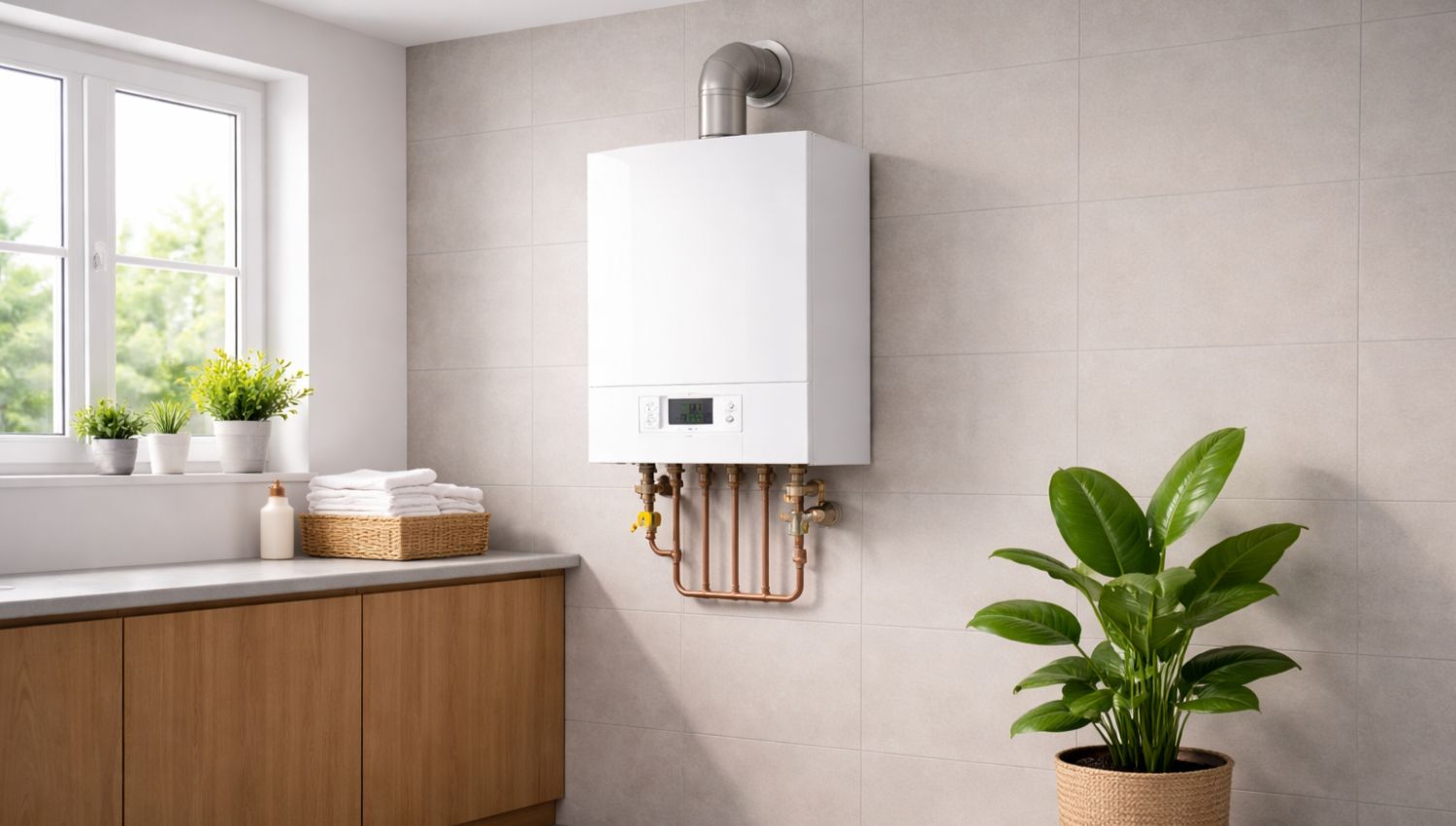
If you’re looking at replacing your boiler, one of the first decisions you’ll face is choosing between a combi boiler and a system boiler. Both are common in UK homes, but they work quite differently – and the wrong choice for your property can leave you with a less efficient, less comfortable heating setup.
Here’s a clear, straightforward guide to help you understand the difference.
What Is a Combi Boiler?
A combi (combination) boiler is the most popular type in the UK. It heats your home and provides hot water on demand, all from a single unit – without the need for a separate hot water cylinder or cold water tank in the loft.
When you turn on a hot tap, the boiler fires up and heats the water directly from the mains. There’s no stored water, which means no waiting for a tank to heat up and no risk of running out mid-shower – as long as you’re not drawing from multiple outlets at once.
What Is a System Boiler?
A system boiler works with a hot water cylinder – usually housed in an airing cupboard – to store a supply of heated water ready for use. Unlike older conventional (heat-only) boilers, system boilers have most of the key components built in, so installation is simpler than it used to be.
The main difference from a combi is that hot water is stored and pre-heated, rather than produced on demand.
The Case for a Combi Boiler
Combi boilers suit a wide range of UK homes and are especially popular in smaller and medium-sized properties. Here’s why:
- Space-saving – no need for a hot water cylinder or loft tank, freeing up valuable cupboard space
- Simpler installation and lower upfront costs in most cases
- Instant hot water from the mains at mains pressure
- Energy-efficient – only heats water when you need it, so there’s no standing heat loss from a cylinder
- Easier to maintain with fewer components involved
The trade-off is flow rate. If two showers are running at the same time, or multiple hot taps are in use, a combi boiler may struggle to keep up.
The Case for a System Boiler
System boilers tend to suit larger homes with higher hot water demand. Here’s where they shine:
- Multiple hot water outlets can run simultaneously without a drop in pressure or temperature
- Hot water is available quickly from the stored cylinder – no waiting for the boiler to fire
- Compatible with solar thermal systems, which can pre-heat the water in the cylinder
- Often the better option for homes with older, larger radiator systems
- Better suited to properties with poor mains water pressure
The main consideration is the space required for the cylinder, and the slight energy loss from storing hot water – though modern well-insulated cylinders minimise this considerably.
Which Is Right for Your Home?
As a rough guide:
- A combi boiler tends to work best for smaller homes, flats, or properties with one or two bathrooms and lower simultaneous hot water demand.
- A system boiler is often the better choice for larger homes with three or more bedrooms, multiple bathrooms, or high hot water usage.
That said, every home is different. Factors like your mains water pressure, the size of your radiator system, available space, and your household’s habits all play a role in the decision.
What About Running Costs?
For smaller homes, a combi boiler is typically cheaper to run because there’s no heat loss from a stored cylinder. For larger households using lots of hot water throughout the day, a system boiler with a well-insulated cylinder can actually be more efficient, as the water is ready and waiting rather than being heated from scratch each time.
Getting It Right First Time
Choosing the wrong boiler type for your home can mean higher bills, tepid showers, or a system that simply doesn’t meet your needs. It’s always worth getting a professional assessment before committing to a new installation.
At NCS Plumbing & Heating, our qualified engineers will assess your property, water pressure, and household needs to recommend the right boiler type and model for you – with no jargon and no pressure.
Get a free, no-obligation quote from NCS today and find out which boiler is right for your home.